Koh Lanta
265 Mu 5, Koh Lanta Yai, Koh Lanta, Krabi 81150, Thailand
followinggiants.lanta@gmail.com Then
Our beginnings
In southern Thailand, it is common for elephants to work in riding camps during the tourist high season, and be used for strenuous logging work in low season. As an alternative to riding and logging, Ray began educating visitors about mahout culture and elephant behavior. Positive feedback inspired him to wonder if his venue could function solely with these programs, but the tourist demand for riding was still the only consistently profitable option at the time.
In 2017, Ray met World Animal Protection and began the transition towards an elephant-friendly business model.
 Today
A kinder path
Under a sustainable tourist program and new name, Following Giants now actively partners with World Animal Protection for on and off-site training, infrastructure development, constant evaluation, as well as continuous improvement for the welfare of the elephants and surrounding nature.
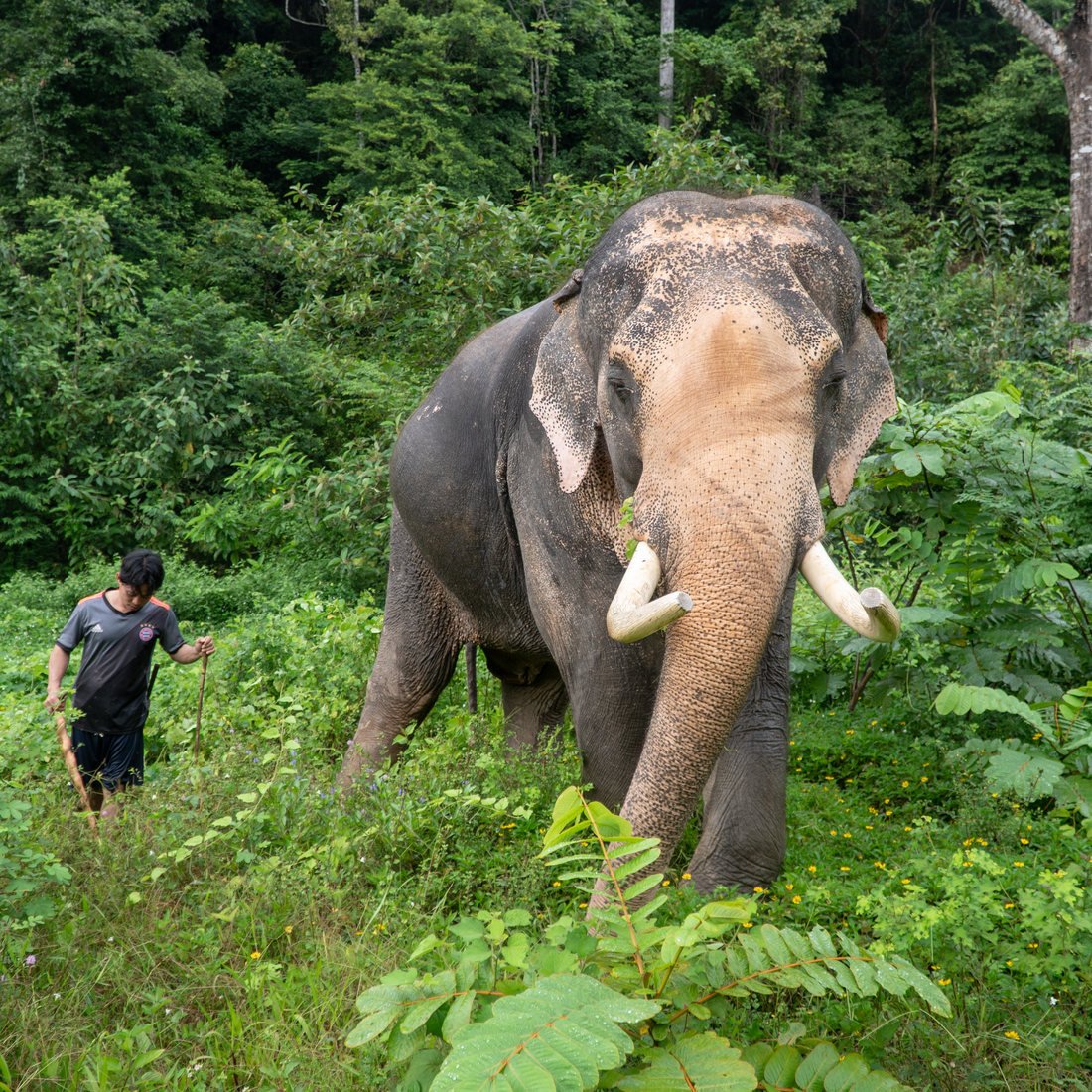
The resident elephants have given their last rides and lifted their last logs. It’s now time for us to follow these gentle giants as they lead the way.
 Tomorrow
A shared vision
Ray’s vision is for Following Giants to be a special place for learning about the traditional mahout-elephant relationship, and where visitors, like you, can join his mission to protect and restore Koh Lanta’s forest for elephants and other wildlife found in the neighboring Mu Koh Lanta National Park.

for our giants

189/1 Mu 1, Saladan, Ko Lanta,
Krabi 81150
Tel.: (66-75) 668021, 668023
Name:
Eco Tourism Recreation
Following Giants Sanctuary
Account No. 797-237327-2
Swift Code: SICOTHBK
265 Mu 5, Koh Lanta Yai, Koh Lanta, Krabi 81150, Thailand
followinggiants.lanta@gmail.com305 Mu 2, Khao Khram, Tha Pom Klong Song Nam, Krabi 81000, Thailand
followinggiants.krabi@gmail.comDo not pay a deposit or share personal information through a page that you cannot verify as an official Following Giants booking channel. Confirm the operating location, program date and provider name before submitting a payment. If you are unsure, contact the sanctuary using the details published on its official website. A genuine offer should provide clear terms, including what is included and how a booking can be changed or cancelled. These checks are particularly important when a search result uses a location name that is not listed among the confirmed sanctuaries. Taking a moment to verify can prevent confusion and help ensure your money goes to the intended service.
Moving away from activities that rely on elephants for entertainment is a practical and continuing process. It involves changing what visitors are invited to do, how staff communicate about the animals and how the environment supports their daily needs. It also requires helping travellers understand that a successful visit does not depend on touching an elephant or watching a staged activity.
For the sanctuary, a transition means continuing to learn about each elephant and responding to individual needs. The team must balance visitor education with quiet spaces, safe routines and the realities of caring for rescued animals. There is no single change that completes this work. Progress is built through daily decisions, staff learning and an ongoing willingness to review how the sanctuary operates.
Visitors are part of this shift too. Choosing an observation-only program supports a different kind of tourism and helps demonstrate that people are interested in learning, not only in direct interaction. Guests can contribute by following instructions, sharing accurate information and encouraging others to ask thoughtful questions before booking animal experiences.
Animal tourism often teaches visitors to expect an immediate activity: a ride, a bath, food offered by hand or a photograph beside an elephant. A quieter visit asks people to pay attention in a different way. Watching without touching can reveal how an elephant uses its surroundings, how it responds to other animals and how much of its day is not shaped around people. It also gives the animal room to move away instead of being held in place for a visitor experience.
This approach requires clear explanations and realistic expectations. Guests may not see every elephant or witness a dramatic moment, and that is not a failure of the visit. The point is to create an opportunity to learn without demanding a performance. Guides can help visitors understand why boundaries matter and how rescued elephants’ experiences influence the care they need.
Following Giants’ transition is ongoing, and the sanctuary continues to make decisions in response to its elephants and environment. Visitors support the change when they choose programmes that prioritise observation, respect the team’s instructions and share an honest account afterward. Small choices by travellers can help make welfare-focused tourism more visible and valued.